From Activity to Impact: Choosing Team Building That Works in Vietnam

Rising salary expectations and a shortage of experienced talent are making investment in people a higher priority in Vietnam. This article looks at how to choose team building that supports retention, stronger teamwork, and better day-to-day performance.
Table of Contents
Team Building in Vietnam: How to Choose the Right Activity
In Vietnam, team building is no longer simply about taking people out of the office for a fun activity. Companies are under pressure to retain strong talent, develop more capable managers, and support teams that need to work together effectively as the business grows. At the same time, experienced mid-level talent is becoming harder to find, which makes internal development and team effectiveness more important than ever.
This is especially true in fast-moving business centres such as Ho Chi Minh City and Hanoi, where competition for talent is strong and employees are paying closer attention to the full work experience, not just salary. A well-chosen team building session can improve connection, communication, and alignment. A poorly chosen one can feel like a distraction.
Choosing the right team building activity starts with understanding what the session needs to change, support, or improve, so it delivers more than a good atmosphere on the day.
Key team building priorities in Vietnam
Companies in Vietnam now need to make team building decisions more carefully. Retention is under pressure, salary expectations are rising, experienced mid-level talent is harder to keep and replace, and budgets are under closer review.
A useful starting question is: if people invest time in this team building session, what should be better when they return to work?

Setting the objective
Clarity on purpose makes every decision easier. When the “why” is clear, the “what” usually follows. Common objectives for teams in Vietnam include:
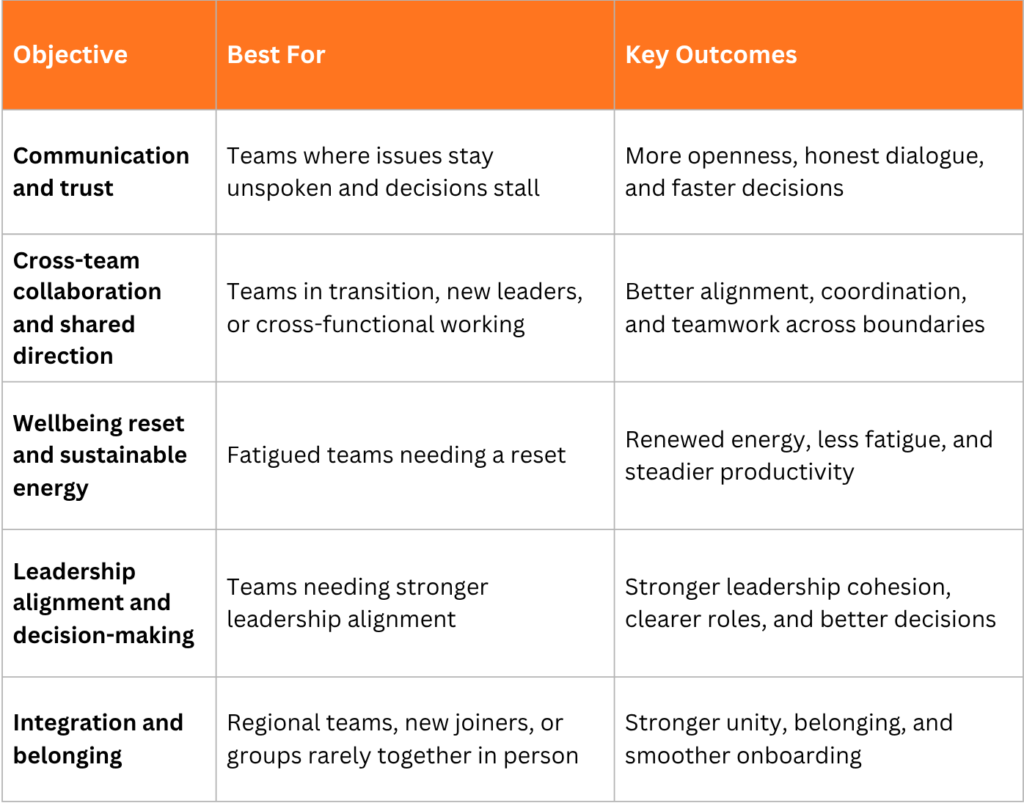
A simple way to lock the objective is to complete this sentence:
After this team building session, the team should be better at…
Why team building choices matter more now
Team building does not happen in a vacuum.
In Vietnam, employees are paying closer attention to how organisations invest in people, development, and the overall work experience.
As businesses grow and teams become more cross-functional, people initiatives are judged quickly. A poorly chosen activity can feel like an extra demand rather than meaningful support. A well-designed one can build trust, clarity, and energy without adding pressure.
That is why many companies in Vietnam now place more emphasis on clear objectives and strategic format choices, rather than activities that feel disconnected from the real purpose.
1. Understanding your team
An activity can look impressive and still miss the mark if it does not match the team’s reality.
i. Culture and identity
The best team building choices feel like a natural extension of how the organisation already works.

The key test is credibility. The activity should feel appropriate for the room, not performative.
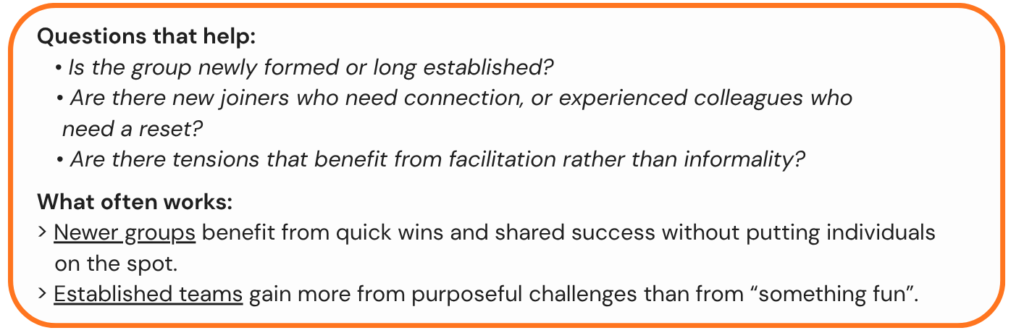
ii. Team maturity and group dynamics
The same format can feel very different depending on where the team is in its lifecycle.
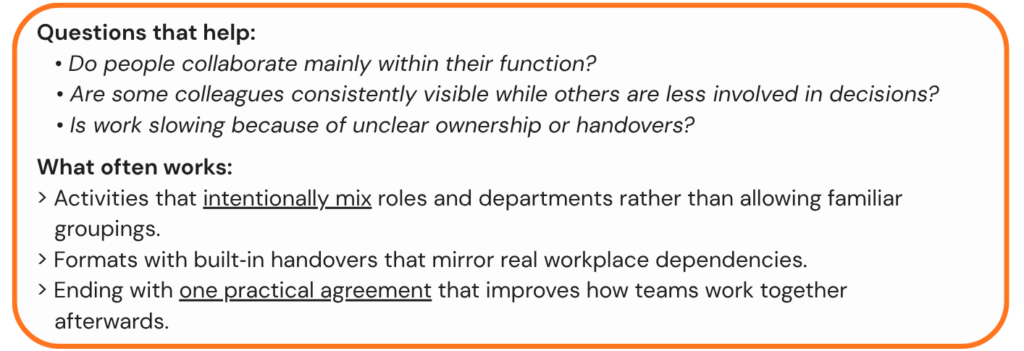
iii. Hybrid working patterns and cross‑team connection
Hybrid teams often work well within their own group but lose connection across teams over time.
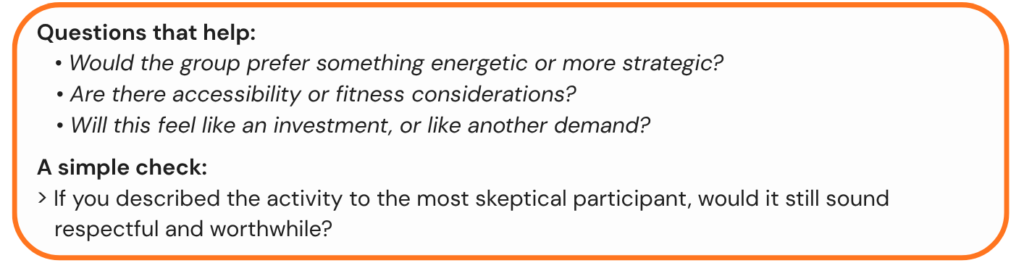
iv. Participant expectations and comfort
Even the best design loses impact if it does not respect comfort levels.
2. Indoor or outdoor: choosing the right setting in Vietnam
In Vietnam, the setting is not just a matter of preference. It depends on the region, the season, and what the wider agenda allows. Weather patterns vary across the country, so what works in Ho Chi Minh City may not suit Hanoi or Da Nang at the same time.
Indoor formats
Ideal when schedules are tight, senior leaders have limited availability, or weather risk is high. They are especially useful during southern rainy periods, central wet months, or when a session sits inside a broader conference agenda.
Outdoor or city-based experiences
Suitable when timing allows and local conditions are favourable. In Ho Chi Minh City, drier months are often more practical for outdoor formats, while in Hanoi, spring and autumn are usually more comfortable for walking, problem solving, and city-based challenges. In Da Nang, planners need to watch the seasonal wet period more carefully before committing to outdoor sessions.
Flexible exploration
City-based challenges that run 90 to 120 minutes, start from the office or hotel, and stay close to the main venue often deliver strong engagement without adding unnecessary logistics.
3. Venue and logistics: practical details that protect the experience
In Vietnam, venue constraints vary by city. Programmes tend to work best when they are built around the available space, local traffic patterns, weather exposure, and the real amount of time participants can give, rather than being forced into a fixed format.
Group size and space
The venue often determines the format. When only a small meeting room is available, choose a programme that fits the space and does not depend on heavy movement or large set ups. An in-office session can be the most efficient option when the priority is to protect time and control costs.
Time and agenda fit
An in-office session reduces travel time and helps keep the agenda stable when schedules are tight. Many programmes can run effectively in one to two hours at the end of the working day, without disrupting the wider plan.
Location and access
Ease of access matters in every major Vietnamese city. Venues that are close to the office, hotel, or main event site help people arrive on time and start with the right energy. For regional meetings, direct access from major hubs such as Ho Chi Minh City, Hanoi, and Da Nang also makes planning easier. Public holiday periods, especially Tet and other long breaks, should be checked early because they can affect travel demand and availability.
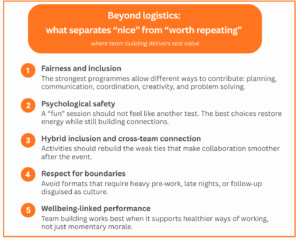
Five questions that sharpen the decision
• What should people feel afterwards: closer, clearer, safer, or simply entertained?
• Which hidden issue is costing the most right now: silos, low trust, slow decisions, burnout signals, or lack of belonging?
• Which behaviours need to become normal again?
• If asked “what did this change?”, what would be a confident answer?
• Does this feel like a real investment in people, or just a calendar event?
What changes on Monday
A strong programme usually ends with one practical takeaway, such as a communication agreement, a decision rule, or a better habit for working together.
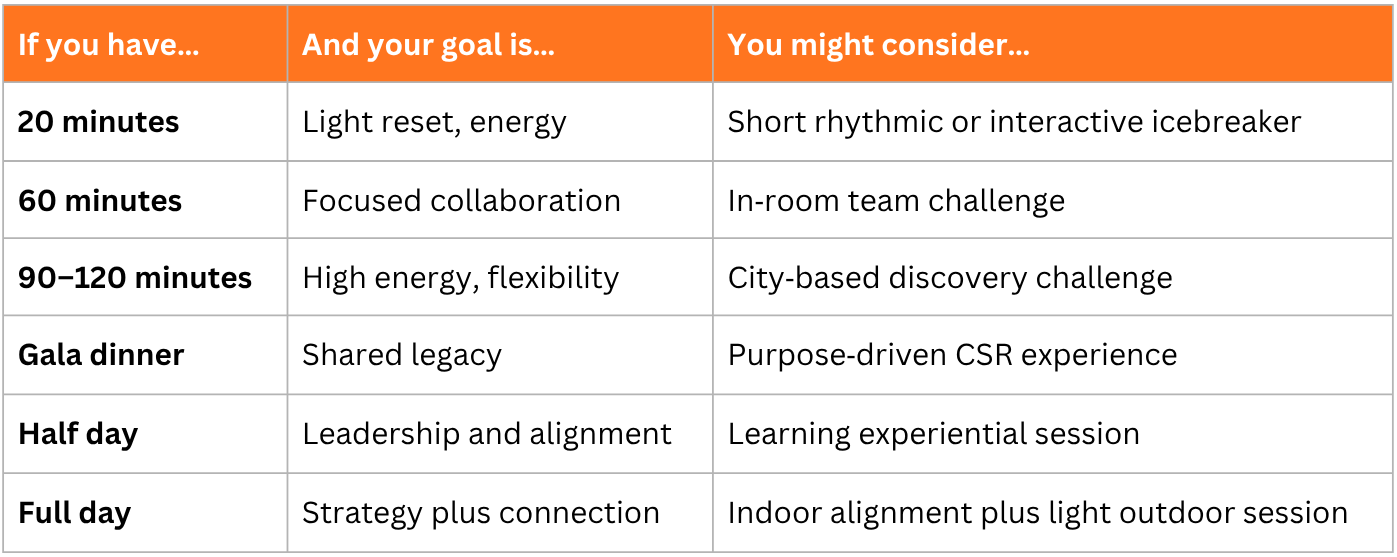
Quick selection guide
FAQs
What is the best team building activity in Vietnam?
There is no single best option. The right choice depends on the outcome you want, then the fit with your team’s culture, comfort level, location, and schedule.
How long should a session be?
The right length depends on the objective, format, and wider agenda. Some goals work well in 20 to 60 minutes, while others need a half day or more to create enough depth and value.
What works best for hybrid teams?
Formats that intentionally mix roles and create structured collaboration usually deliver more value than informal bonding alone.
How does team building support retention?
It supports retention by strengthening trust, recognition, clarity, and healthier ways of working, rather than adding pressure.
Should we run this internally or use a professional provider?
Internal delivery can work well when you have an experienced trainer and the session is more technical or specific to your internal context. For larger groups, sensitive team dynamics, or programmes where facilitation quality is critical, an external provider can bring stronger design, neutrality, and delivery support.
Closing
Effective team building in Vietnam is rarely about finding the most exciting activity. It is about making choices that fit the reality teams are working in, including time pressure, regional logistics, seasonal weather, hybrid working patterns, and business expectations.
When objectives are clear and the format is shaped around real space, time, and participant needs, team building becomes practical support for how people collaborate, make decisions, and manage pressure when they return to work.
For organisations planning conferences, leadership sessions, or team gatherings in Vietnam, these decisions are best made early. Small choices around location, timing, and format often determine whether the experience feels worthwhile or disruptive.
Connect with Bruno on LinkedIn
If you’d like to exchange perspectives or explore how these insights apply to your organization, Bruno welcomes professional dialogue and experience‑sharing.
About the Author: Bruno Simões, MBA, CMP